


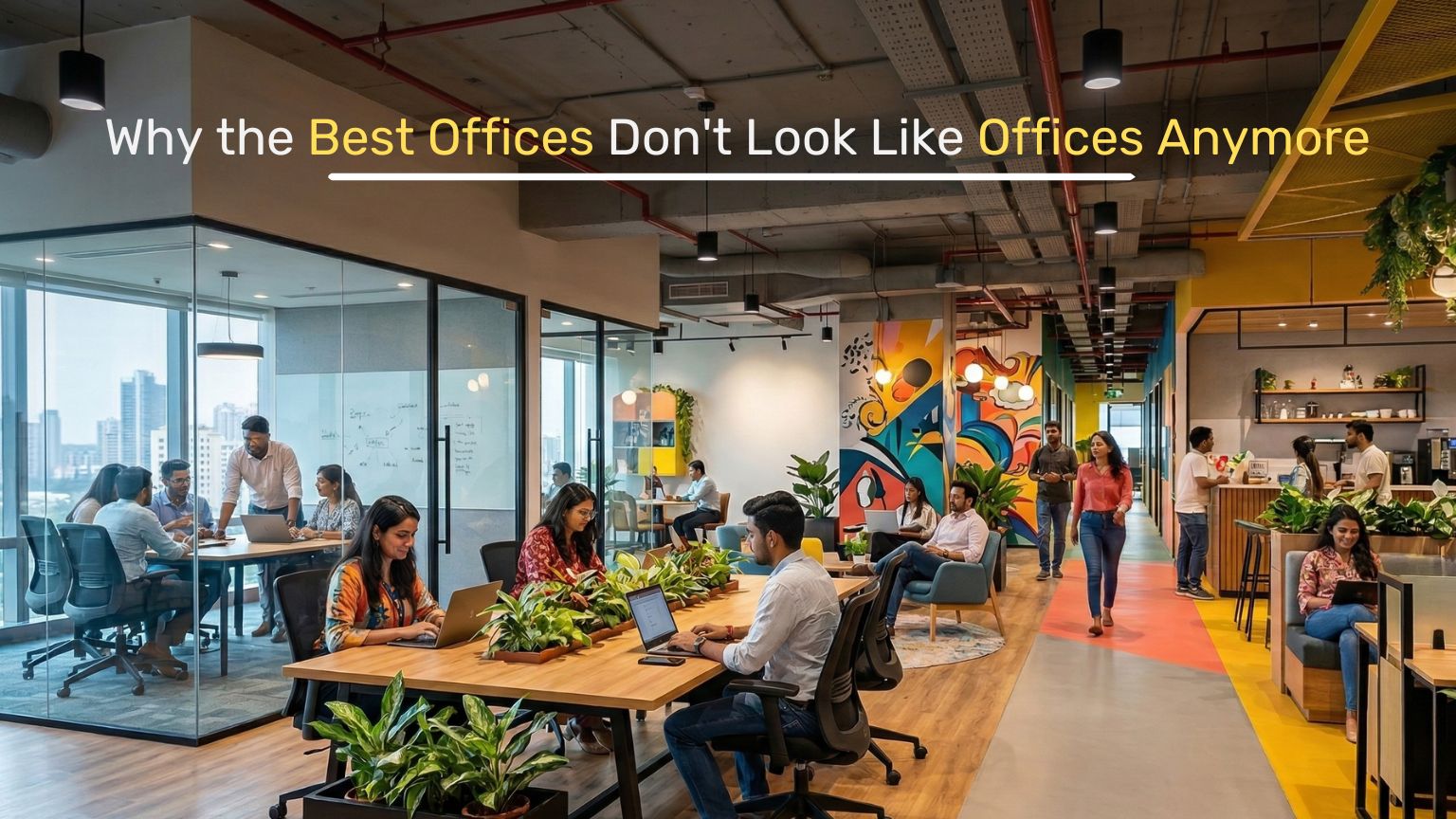
Walk into a well-designed office today and there’s a good chance it’ll take a moment to register that it’s actually a workplace.
No rows of identical desks. No fluorescent lights humming overhead. No grey partitions cutting the room into boxes. Instead you’ll find warm lighting, open layouts, a lounge corner that feels like a cafe, and furniture that looks like someone actually thought about it before buying it.
This isn’t a design trend borrowed from abroad. Something has genuinely shifted in the way Indian companies think about what an office should look and feel like. Startups, growing teams, large corporates — all of them are asking different questions about their workspaces than they were five years ago. And the answers are showing up in the spaces they’re building.
Reception at the front. Rows of workstations in the middle. Cabins for the senior people along the sides. A conference room that was either always empty or impossible to book.
1. For a long time, offices in India followed the same formula
Everything functional, nothing particularly considered.
Work got done. But the space was never really designed around people. It was designed around fitting as many desks as possible into a floor. Around looking professional in a way that mostly just meant looking serious.
Nobody was asking whether people enjoyed being there. Nobody was asking whether the space helped them do their best work. Those questions simply weren’t part of the conversation.
2. Then a few things changed at once
The startup wave that swept through Indian metros brought a different way of thinking. Founders who had grown tired of the old formula started building spaces that felt different. Less corporate. More human. Spaces where the furniture didn’t look like it came from a government supply catalogue.
Then came two years of working from home. That period taught people something they hadn’t fully registered before. That environment matters. That where you sit affects how you think. That a proper ergonomic office chair isn’t a luxury, it’s just basic. That a well set up desk is the difference between a productive day and a completely draining one.
When people came back to offices, they came back with higher expectations. The old setup felt harder to tolerate than it used to.
And then there’s the talent question. Hiring and keeping good people in India has become genuinely competitive. The office is part of the offer now. A space that feels good to be in is a reason to show up. A space that doesn’t feels like a quiet reason to look elsewhere.
3. What these offices actually look like now
The shift isn’t about spending more money. Some of the most thoughtfully designed offices in India are working with budgets that would surprise you. It’s about making different choices.
4. Workstations that are actually built for work
The modular office workstation has largely replaced the old fixed desk setup and for good reason. Different work needs different settings. A focused heads down task doesn’t happen the same way a collaborative discussion does. Good office workstation furniture gives people the flexibility to work the way the work actually demands rather than forcing everyone into the same rigid setup regardless of what they’re doing.
5. Seating that doesn’t wear people out
This one gets overlooked more than it should. People sit for seven, eight, sometimes nine hours a day. An ergonomic office chair that supports the back properly, adjusts to the person using it, and doesn’t cause that familiar afternoon shoulder ache isn’t an upgrade. It’s a necessity. The difference between a high back office chair with proper lumbar support and a cheap substitute shows up slowly, in the energy levels and focus of the people using it every day. It’s one of those things you don’t notice when it’s right but you absolutely notice when it isn’t.
6. Tables that reflect the work being done
The executive table has moved away from the oversized imposing wooden desk of the old corner cabin. The latest office table designs are cleaner, more functional, and built for the way people actually work today with multiple screens, quick reference material, and frequent calls. A good wooden office table design finds the balance between presence and practicality without making the room feel like it’s trying too hard.
7. Common areas that are actually worth spending time in
A well chosen office lobby sofa or waiting sofa for office isn’t just for visitors. It’s where informal conversations happen, where someone steps away from their desk to think through a problem, where the culture of a team quietly builds without anyone scheduling it. A reception sofa set that looks and feels considered tells anyone who walks in that this place takes its space seriously. That’s a small detail with a surprisingly large effect.
8. The spaces between the work
The breakout areas, the lounge corners, the spots where people pause between tasks. These informal spaces are where a lot of real connection in a team happens. The kind that no team building exercise can manufacture. Height adjustable desks placed in open areas, comfortable lounge seating, small corners that invite people to step away and come back sharper. These are the details that separate a good office from a great one. They sound minor until you’ve experienced both.
9. It’s not about looking good for visitors
This is the part that gets misread. When people hear office design they assume it’s about making the space look impressive for clients or generating content for social media.
That’s not what’s driving this shift.
The offices that stand out in India right now are designed the way they are because the people behind them understand something straightforward. The space you work in affects how you feel. And how you feel affects how you work.
An uncomfortable chair is a low grade constant distraction. A poorly lit room is draining in a way that’s hard to pinpoint but impossible to ignore once you’ve noticed it. A space that feels cold and impersonal has a quiet effect on morale even when nobody says it out loud.
The opposite is equally true. A workspace that’s comfortable, functional, and has some warmth to it makes people more present and more focused. It’s not magic. It’s just that the basics are covered and that matters more than most people give it credit for.
10. The question worth asking
Whether it’s a ten-person startup or a floor of two hundred people, the question worth sitting with before setting up or redesigning a workspace is a simple one.
How do you want people to feel when they walk in here?
Not what impression should it make? Not what’s the most efficient use of floor space. Just how should it feel to spend a day here?
That question changes what gets built. And increasingly the companies that are asking it are ending up with spaces that don’t look like traditional offices at all.
That might be exactly the point.
We helps startups, growing teams, and large offices build workspaces that are functional, comfortable, and worth showing up to every day. From modular workstations and ergonomic seating to executive tables and reception areas, every piece is chosen with the people using it in mind.