


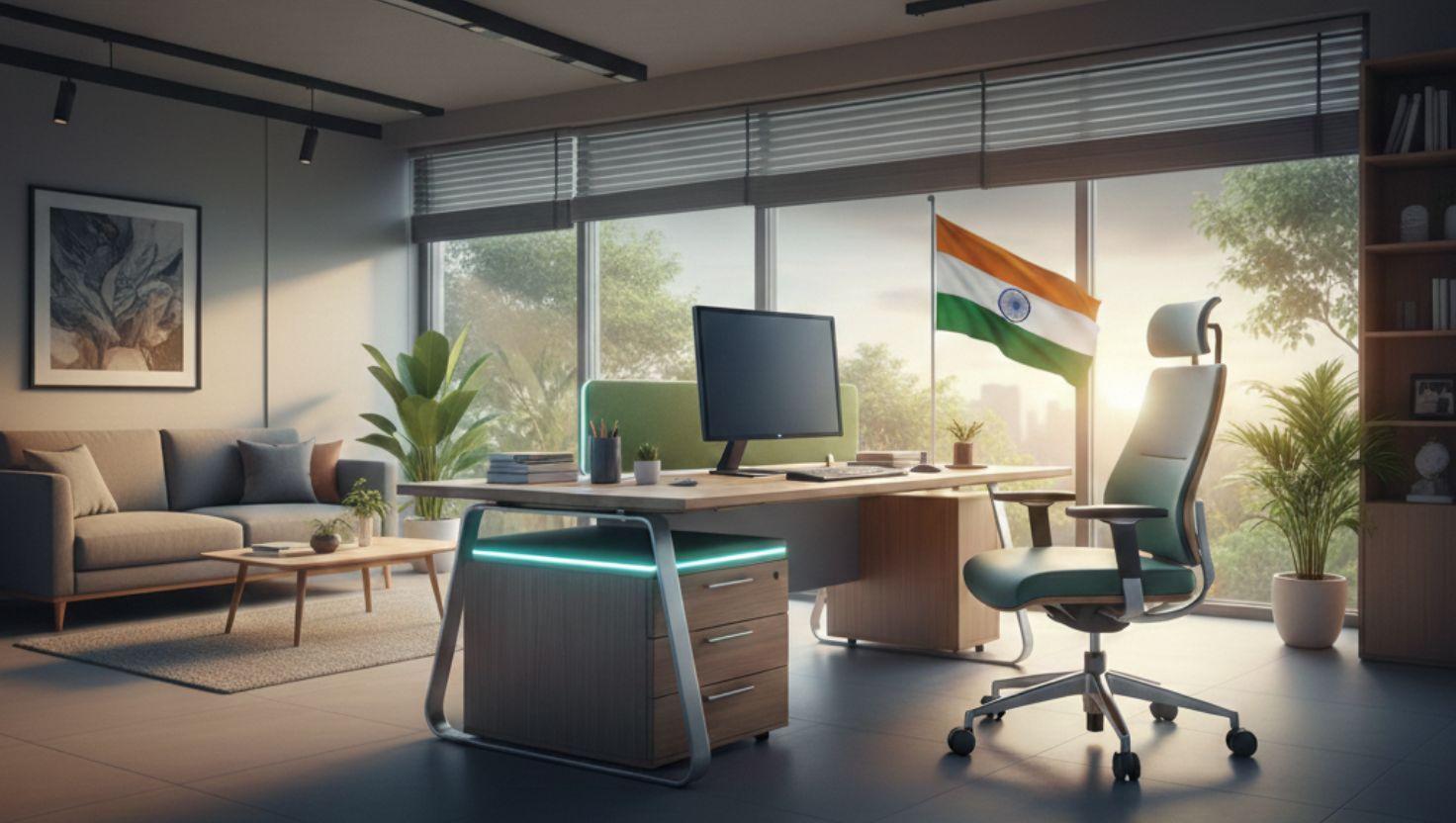
Corporate offices in India are quietly changing, not through loud design statements, but through more careful planning decisions. Over the last few years, many organizations have realized that furniture choices made in hurry often create problems later. As companies look ahead to 2026, office furniture planning trends are becoming more grounded, experience-led, and long-term in nature.
This shift is visible across modern corporate offices in India, especially among organizations that have already gone through one or two major office expansions. Furniture is no longer treated as a decorative layer. It is being seen as part of the working infrastructure, much like power systems or IT networks.
Around periods like Republic Day, leadership teams often pause to evaluate how well their workplaces reflect stability, responsibility, and future readiness. Office planning, though rarely discussed publicly, becomes part of that internal reflection.
Planning before purchasing
One noticeable change in office furniture planning trends is that companies are spending more time understanding how people actually work. Earlier, planning often started with drawings and floor plans. Now, it usually begins with internal discussions.
Questions like how long employees sit, how teams collaborate, or where interruptions happen most frequently are shaping office workspace planning decisions. Furniture comes later in the process.
This approach reduces costly revisions. It also prevents situations where visually attractive corporate office furniture fails to support daily work routines. Offices planned this way tend to age better because they are built around usage, not assumptions.
Built-in flexibility
Flexibility in 2026 is less about movable pieces and more about smart systems. Organizations are choosing furniture that can quietly adapt without needing frequent replacements.
Workstations that allow panel changes, office tables that can be reconfigured, and storage units that fit into multiple layouts are becoming standard choices. This is especially important for companies that expect gradual team growth rather than sudden expansion.
From practical experience, fixed furniture often becomes a limitation within three to four years. Flexible systems, when planned properly, continue to serve well beyond that period.
Ergonomics beyond checklist
Ergonomic office furniture is being evaluated more critically than before. Corporate teams are no longer satisfied with basic adjustment features alone. Comfort over long hours has become the real benchmark.
The high back office chair, for instance, is being selected not for status but for sustained posture support. Teams that work on screens for extended durations require seating that performs consistently, not just on the first day.
At the same time, planners are becoming cautious. An office chair that looks ergonomic but breaks down under regular use creates dissatisfaction quickly. Durability and ergonomics are now discussed together during planning stages.
Construction quality focus
Another strong trend shaping office furniture planning is attention to internal construction. Corporate buyers are asking about materials beneath the surface.
Office tables, workstations, and storage units face constant movement, cleaning, and cable adjustments. Weak joints or low-grade frames show wear early. Organizations that have faced repeated repairs understand this well.
As a result, furniture decisions are increasingly influenced by long-term performance rather than appearance alone. This shift reflects maturity in procurement thinking.
Function-driven customization
Customization in corporate furniture planning for 2026 is becoming more practical. Instead of visual branding alone, companies are asking for solutions that match operational needs.
Some teams need deeper desks, others require more shared storage. Certain departments benefit from quieter layouts, while others need open collaboration. Office furniture design is being tailored accordingly.
This type of customization improves daily efficiency without drawing attention to itself. Employees adapt faster when furniture supports their work rather than forcing adjustments.
Space optimization without crowding
Space constraints remain a reality, especially in urban business districts. However, the approach to space optimization is changing.
Office workspace planning now focuses on balance. Overcrowding is being avoided after many organizations experienced productivity dips in overly dense layouts. Clear circulation, adequate personal space, and visual openness are being prioritized.
Well-planned corporate office furniture plays a key role here. Slim storage units, integrated wiring, and multi-use office tables help maintain functionality without visual clutter.
Collaboration vs focus zoning
The open office model is being refined instead of abandoned. Companies have learned that different tasks require different environments.
Collaborative zones are planned with larger tables and flexible seating. Focus areas rely on consistent workstation layouts and supportive seating. These zones are no longer mixed randomly.
This balanced approach has become a defining feature of modern office furniture planning trends. It reflects lessons learned from years of trial and adjustment.
Sustainability through longevity
Sustainability discussions around furniture have become more practical. Instead of focusing only on labels or certifications, organizations are evaluating how long furniture actually lasts.
A workstation that performs well for ten years often creates less waste than multiple short-term replacements. Durability, ease of maintenance, and repair options are now part of planning conversations.
This mindset aligns environmental responsibility with operational efficiency.
Standardization for scale
Enterprises managing multiple locations are increasingly standardizing furniture systems. Consistency simplifies maintenance, future expansions, and internal transfers.
Layouts may differ, but core furniture elements remain the same. This allows bulk execution while maintaining functional flexibility.
For large corporate and institutional environments, this approach reduces complexity and supports long-term planning.
Moving forward with practical clarity
Office furniture planning for 2026 reflects experience more than experimentation. Companies are choosing what works over what trends briefly. They are investing in furniture that supports people quietly and consistently.
Moments of reflection like Republic Day often remind organizations of their responsibility toward employees and infrastructure. Office environments, shaped through thoughtful planning, play a subtle but important role in that responsibility.
For Adhunika Furnitures, this perspective aligns naturally with years of working on commercial projects where quality, customization, and long-term performance matter more than surface appeal. As corporate offices evolve, office furniture planning trends will continue to favor decisions rooted in experience, restraint, and durability.