


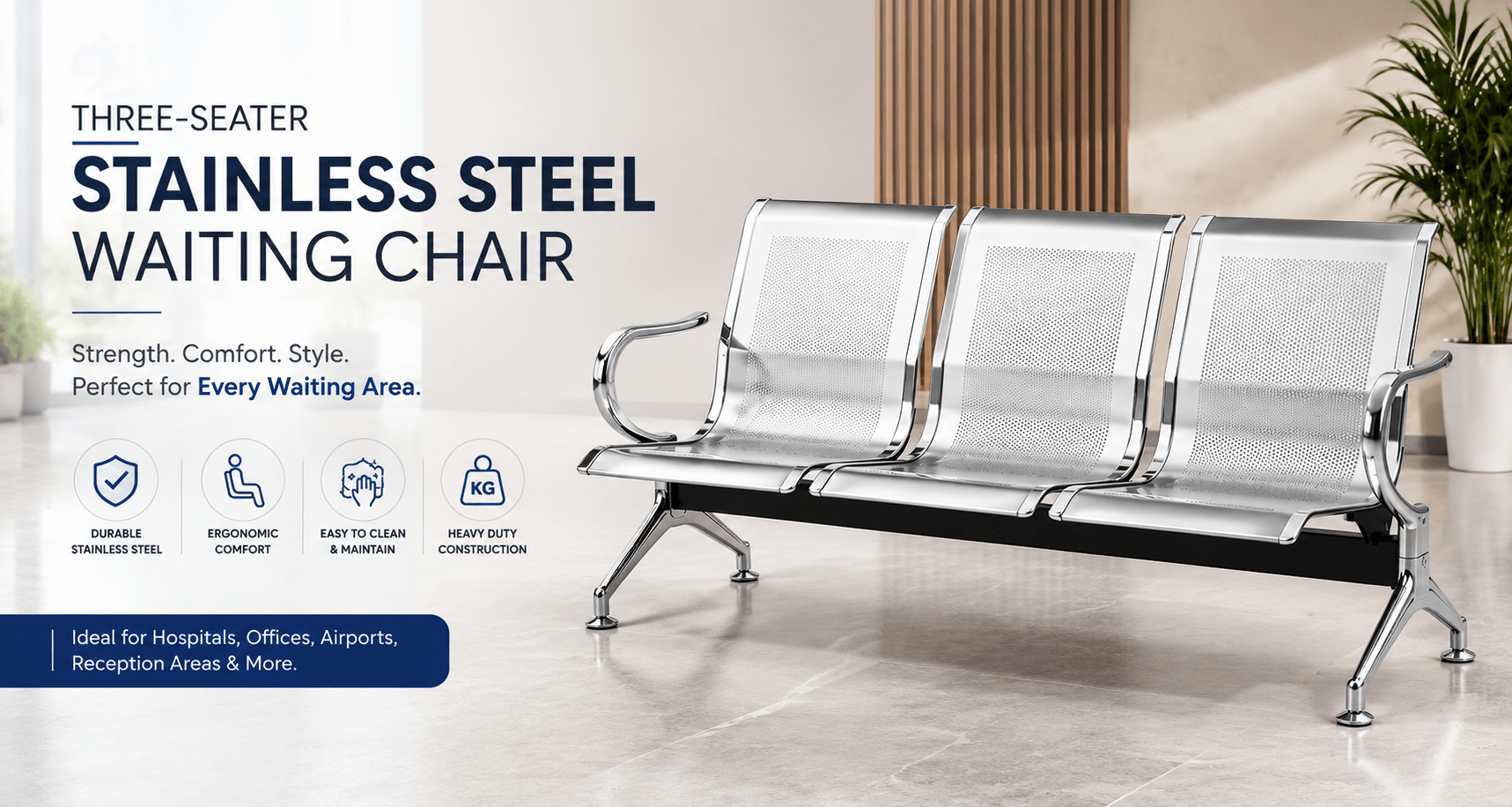
Choosing seating for a commercial waiting area is very different from selecting an ordinary chair. Hospitals, clinics, offices, reception areas, institutions and other high-traffic spaces need seating that can accommodate multiple visitors while remaining practical to clean and maintain. A 3 Seater Stainless Steel Waiting Chair provides three connected seats within a single structured unit, making it a practical option for organized waiting-area layouts. Its metal construction, shared support structure and commercial appearance make this type of seating especially relevant for spaces where durability and efficient use of floor space matter.
In this guide, we explain how three-seater waiting chairs work, where they can be used, what buyers should check before ordering, and why stainless steel waiting seating remains a practical choice for many commercial projects.
What Is a Three Seater Stainless Steel Waiting Chair?
A Three Seater Stainless Steel Waiting Chair is a connected seating unit designed to accommodate three people side by side. It typically combines metal seats and backrests with a supporting beam, legs and armrests or end supports, depending on the model. Unlike three separate visitor chairs, a connected 3-seater waiting chair keeps the seating arrangement aligned and organized. This makes it particularly useful in waiting rooms where multiple visitors need to be seated within a defined area.
Depending on the design, a three-seater unit may feature:
- Stainless steel or metal seat and backrest panels
- Perforated seating surfaces
- Shared structural beam
- Metal legs and supports
- Integrated armrests
- Contoured seat profiles
- Polished or brushed metal finishes
The exact material grade, dimensions, load requirements and construction should always be confirmed with the manufacturer before placing a commercial order.
Why Choose Stainless Steel Seating for Waiting Areas?
Stainless steel waiting chairs are commonly considered for commercial environments because they combine a structured appearance with relatively straightforward maintenance and a space-efficient connected seating format. For businesses and institutions dealing with regular visitor traffic, furniture must do more than look attractive. It needs to fit the available space, be practical for daily use and complement the surrounding commercial environment.
1. Suitable for High-Traffic Commercial Spaces
Waiting areas can experience frequent use throughout the day. Individual lightweight chairs may be moved out of alignment, creating an untidy layout. A connected three seater steel chair provides a more organized seating arrangement because the three seats form one unit. This can be useful for locations such as hospitals, offices, clinics and public reception spaces.
2. Easy-to-Maintain Surfaces
For commercial furniture, maintenance requirements can significantly influence purchasing decisions. Non-upholstered stainless steel surfaces do not rely on fabric coverings that can trap visible stains. Their smooth surfaces can generally be wiped as part of routine cleaning, although the appropriate cleaning method should depend on the particular finish and manufacturer’s care recommendations. This characteristic makes a metal hospital waiting chair particularly practical where frequent housekeeping is required.
3. Efficient Use of Waiting-Area Space
A three-seat configuration makes planning a waiting room easier because multiple visitors can be accommodated in a single connected furniture unit. Businesses can arrange several units in rows or along walls according to available circulation space and visitor capacity.
4. Professional Commercial Appearance
Metal waiting chairs provide a clean, structured aesthetic that works well with many commercial interiors.
They can complement:
- Hospitals
- Clinics
- Corporate offices
- Reception areas
- Institutions
- Service centres
- Airports and transport facilities
- Commercial buildings
The neutral character of stainless steel also allows it to coordinate with many flooring, wall and reception-counter finishes.
Where Can a 3 Seater Waiting Chair Be Used?
A 3 seater waiting chair is particularly useful in environments where visitors spend a short to moderate period waiting for service, appointments, meetings or transportation.
Hospitals and Clinics
Healthcare waiting rooms often need seating for many visitors while maintaining organized circulation.
A hospital waiting chair with a connected three-seat structure can be considered for:
- Hospital reception areas
- Clinic waiting rooms
- Diagnostic centres
- Consultation waiting zones
- Pharmacy waiting areas
- Administrative sections
When purchasing seating for healthcare projects, buyers should separately verify any facility-specific hygiene, accessibility, safety and regulatory requirements.
Corporate Offices
An office waiting chair is useful near reception counters, visitor lounges, HR departments and administrative waiting zones. Three connected seats can provide a visually orderly solution without requiring staff to repeatedly reposition individual chairs.
Reception Areas
First impressions matter in customer-facing commercial spaces. A reception waiting chair should support the functional requirements of visitors while matching the professional character of the reception area. Stainless steel seating can work particularly well in interiors that favour a minimal, modern or institutional design language.
Airports and Transportation Areas
Transport environments can involve high visitor volumes and extended operating hours. Connected metal seating can help maintain structured rows and simplify space planning. For such projects, specifications such as structural strength, fixing requirements, seat dimensions and applicable safety standards should be evaluated based on the project.
Commercial and Institutional Spaces
Three-seater steel waiting chairs can also be considered for banks, educational institutions, service centres, government facilities and other commercial waiting zones.
How to Choose the Right 3 Seater Stainless Steel Waiting Chair
The right 3 Seater Stainless Steel Waiting Chair should be selected according to construction quality, dimensions, comfort, maintenance needs, installation requirements and the expected level of commercial use. Do not make a purchasing decision based only on appearance or price.
Check the Frame and Supporting Structure
The support structure plays an important role in the stability of a three-seater chair.
Ask the manufacturer about:
- Frame construction
- Supporting beam
- Leg construction
- Welding quality
- Seat attachment method
- Floor-contact points
- Recommended use
For larger projects, request technical specifications rather than relying only on product photographs.
Evaluate the Seat and Backrest
A stainless steel bench for a waiting room should provide practical seating while maintaining a compact commercial design. Look at the:
- Seat width
- Seat depth
- Backrest height
- Seat contour
- Spacing between armrests
- Overall dimensions
Comfort becomes increasingly important when visitors are likely to wait for longer periods.
Consider the Finish
Metal finish affects both appearance and maintenance. Depending on the product, manufacturers may offer polished, brushed or other metal finishes. Buyers should confirm the exact finish before ordering because appearance can vary considerably between product specifications.
What Should Commercial Buyers Ask Before Ordering?
Before purchasing waiting chairs in bulk, request clear specifications from the manufacturer or supplier.
Important questions include:
- What materials are used for the seats, frame, beam and legs?
- What are the complete product dimensions?
- What finish options are available?
- What is the recommended usage environment?
- Are customization options available?
- What quantity qualifies as a bulk order?
- What is the production lead time?
- What warranty terms apply?
- How should the chair be cleaned and maintained?
- Are installation or assembly requirements involved?
These questions make it easier to compare quotations based on actual product specifications instead of price alone.
Stainless Steel Waiting Chairs for Hospitals
Hospitals require furniture choices that account for frequent visitor use, routine cleaning and efficient space planning. A non-upholstered hospital waiting chair can reduce some of the maintenance considerations associated with fabric-covered seating. Connected seating also helps maintain an organized layout in busy waiting zones.
However, healthcare buyers should not assume that every stainless steel chair automatically meets healthcare-specific requirements. Material specifications, cleaning protocols, accessibility requirements and any applicable standards should be checked for the particular facility.
Stainless Steel Waiting Chairs for Offices and Receptions
Corporate waiting areas usually have different priorities from hospitals. Appearance, visitor comfort and coordination with the interior design may receive greater attention.
A metal office waiting chair can suit:
- Corporate receptions
- Administrative offices
- Meeting-room waiting zones
- Business centres
- Customer service departments
Similarly, a reception waiting chair can create a defined visitor seating area without introducing multiple loose chairs.
Maintenance Tips for Stainless Steel Waiting Chairs
Regular care helps maintain the appearance of commercial waiting furniture. For general maintenance:
- Remove dust regularly with a soft cloth.
- Clean spills promptly.
- Follow the manufacturer’s recommended cleaning products.
- Avoid harsh abrasive materials unless specifically approved for the finish.
- Check bolts, joints and supports periodically.
- Inspect the furniture if it has been subjected to unusual impact or misuse.
For hospitals or other controlled environments, follow the facility’s approved cleaning and disinfection protocols rather than relying solely on general furniture-cleaning advice.
Why Buy Waiting Chairs Directly From a Commercial Furniture Manufacturer?
Working with a commercial furniture manufacturer can be especially useful when a project requires multiple seating units, specification consistency or customization. Instead of evaluating only the unit price, commercial buyers can discuss quantity, dimensions, finishes, project requirements, delivery and other specifications before finalizing the order.
Adhunika Furnitures, a commercial furniture manufacturer based in Jaipur, serves businesses looking for furniture solutions for commercial and institutional environments. For bulk waiting-area projects, buyers can discuss their seating requirements, quantity and available customization directly with the team.
Is a 3 Seater Stainless Steel Waiting Chair Right for Your Space?
A 3 Seater Stainless Steel Waiting Chair is worth considering when your waiting area requires three-person connected seating, an organized layout, non-upholstered metal surfaces and furniture intended for commercial environments.
It can be particularly suitable for hospitals, clinics, offices, receptions, institutions and other structured waiting areas. Before purchasing, compare construction, dimensions, comfort, finish, maintenance requirements and supplier support. A well-planned 3 seater waiting chair should fit not only the number of visitors you expect but also the physical layout and operational requirements of the space.
For commercial projects in Jaipur and across India, Adhunika Furnitures can help businesses evaluate waiting-area furniture based on project requirements and bulk quantities.
FAQ
What is a 3 Seater Stainless Steel Waiting Chair?
A 3 Seater Stainless Steel Waiting Chair is a connected commercial seating unit designed for three people. It typically uses metal seats and backrests mounted on a common supporting structure and is used in hospitals, offices, receptions, clinics and institutional waiting areas.
Where can three-seater steel waiting chairs be used?
They can be considered for hospitals, clinics, corporate offices, reception areas, banks, educational institutions, service centres, transport facilities and other commercial waiting spaces.
Is a stainless steel waiting chair suitable for hospitals?
Stainless steel waiting seating can be suitable for many hospital waiting areas because it provides non-upholstered surfaces and organized connected seating. Buyers should still verify healthcare-specific cleaning, accessibility, safety and facility requirements.
What should I check before buying a 3 seater waiting chair?
Check the materials, frame construction, supporting beam, seat dimensions, overall size, finish, joints, maintenance requirements, warranty and intended usage. For bulk orders, also confirm production and delivery timelines.
Are stainless steel waiting chairs easy to maintain?
Their non-upholstered metal surfaces can generally be wiped and maintained relatively easily. The correct cleaning products and methods depend on the particular metal grade and finish, so the manufacturer’s care instructions should be followed.
Is a stainless steel bench better than separate waiting chairs?
It depends on the application. A connected stainless steel bench helps maintain an orderly seating arrangement, while individual chairs provide greater flexibility for rearranging the layout.
Can waiting chairs be customized for bulk commercial projects?
Customization depends on the manufacturer and model. Commercial buyers should ask about available dimensions, finishes, seating configurations and other project-specific options before placing a bulk order.
How much does a 3 Seater Stainless Steel Waiting Chair cost in India?
Prices vary according to material specifications, construction, dimensions, finish, order quantity and customization. For an accurate commercial quotation, provide the manufacturer with the required quantity and specifications rather than relying on a generic market price.