

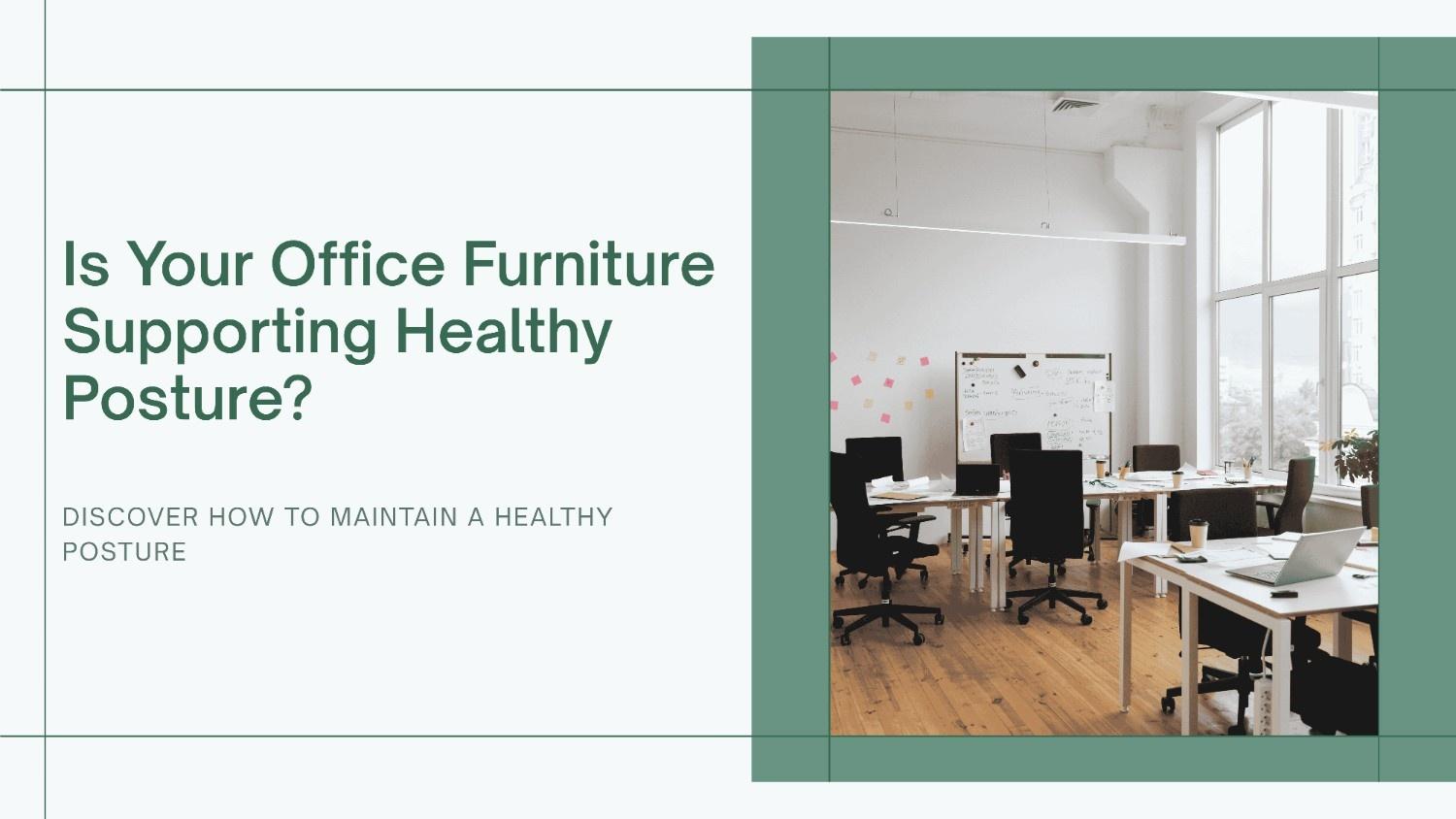
In today’s fast-moving environment, one finds oneself spending a lot of time at the desk typing away, meeting others, and dealing with teams. However, very few people are aware that office furniture can help contribute to good posture for long-term health and productivity at the workplace. Be it investing in a new executive table or a conference table to set up a meeting room in the office, or selecting the best high-back office chair, the right selection can make the workplace a much healthier and more comfortable area to stay in.
The big question is whether the tables and chairs at your office support healthy posture or not. Now, let’s look deep inside to find out.
Why Healthy Posture Matters in the Workplace
Good posture involves a lot more than just standing tall or even looking confident; it involves everything from the lineup of your spine right down to the level of your energy. Long-term bad posture is most likely to result in the following :
- Chronic back, neck and shoulder pain
- Reduced productivity and fatigue
- Poor circulation
- Headache and eye strain
- Long-term musculoskeletal disorders
Workers having to perform in badly designed workspaces feel discomfort that later on grows into grave health problems. Today, designing furniture for human comfort, or in other words ergonomics, is not a want but a need.
Signs Your Furniture Isn’t Supporting Your Posture
You probably don’t realize that furniture is a problem for you, but your body does. Here are common indications that tell you the present arrangement of a table or chair is bothering you.
- You slouch or lean forward while working.
- Your legs are cramped under your desk.
- Your chair doesn’t support the lower back.
- Stiffness after long meetings.
- Your wrists and shoulders ache when you type
- Your feet do not rest flat on the floor.
If any of the above sounds familiar, then it is time to think twice about the choices one makes for office furniture—the most important being the chair and table section.
Office Tables Play a Very Important Role in Posture Support
1. Executive Desk: Comfort and Functionality Combined
Though it usually forms the centerpiece of an executive cabin, it is much more than a style element. Here are some things that a well-designed executive table should achieve:
- Provide appropriate height to maintain a 90 degree elbow angle.
- Provide ample legroom.
- Have enough space for a laptop, papers, and equipment to be placed on.
- Allows for the proper positioning of the wrist while typing.
- Keep the computer screens at eye level.
Just imagine one big executive desk of storage that sorts all your wires out for you. That would absolutely clean desk-to-desk and improve your posture.
2. Conference Table: Long Discussions Are Held At
Little thought is given to how conference tables can influence a person’s posture; it does, though, because during conferences, people lean forward, twist spines, and slouch if their seating arrangement in the conference is not comfortable.
Any good office conference table would do the following:
- Proper height for different chair styles
- Adequate knee space for all participants
- Compatible with Ergonomic Seating
- It is an oval, rectangular, or boat-shaped form that invites comfortable eye contact.
- The spacing is such that crowding is not experienced.
A good office conference table ensures good posture and participation; hence, it makes a long meeting not tiresome but efficient.
Office Chairs for Posture Support
Tables are important, but chairs come first.
1. High-Back Office Chair: A Must for Spinal Support
One of the best ways to encourage good posture is through a high-backed premium office chair. A high-back chair is going to be designed in such a way that it will support the following parts of the body:
- Neck
- Upper back
- Lower back: The lumbar region
- Shoulders
Features to look for in your purchase:
- Adjustable seat height
- Tilt-adjustable backrest
The features that a high-back executive chair will have include the following: lumbar support, padded armrests, breathable upholstery, and wheels to ease locomotion.
High-back chairs are designed in such a way that because of proper distribution of body weight the strain on them is reduced. A chair is a must to sit with proper spinal alignment, especially for those people who have jobs that require them to sit continuously for a very long time.
2. Office Visitor Chair: Comfort for Brief Seating
One of the most valued things that can be given mainly to the clients or guests who come to wait or attend brief meetings is good posture, which is highly undermined by office visitor’s chairs.
A good visitor chair should:
- Have an upright supportive backrest.
- Provide appropriate cushioning.
- Keep the seat height at its optimum position.
- Encourage natural posture without slouching.
The other benefits apart from giving a good impression to customers are comfort provided by the visitor chair itself which includes posture support.
How to Arrange Your Furniture for Good Posture
The best furniture cannot help if it is not set up properly. Here are general, ergonomic guidelines that will help you set up a perfect workstation.
- Chair Height: Your feet should rest flat on the floor. From here your knees should bend at a 90-degree angle.
- Table height: When you are comfortably typing, your elbows should be at desk level.
- Screen Position: Your monitor should be at eye level and at least arm’s length away.
- Back Support: Adjust the chair’s lumbar support to maintain the normal curve of the spine.
- Arm Support: Arms should be supported with armrests in order to decrease shoulder strain.
- Leg Room: Wherever possible, avoid putting your storage units right under your desk; give your legs room for movement.
Why Ergonomic Office Furniture is a Smart Investment
Buying the right type of executive table, conference table, office chair high back and visitor chair is not an expense for the office but is an investment in the long run, assuring well-being for your employees.
These benefits include the following:
- Increased productivity
- Reduced absenteeism
- Improved workplace morale
- Fewer health complaints
- Professional, modern look for the office
Indeed, it is documented that workers in ergonomic settings tend to be more productive, attentive, and even happier on the job.
How to Pick the Correct Furniture for Your Office
Following are a few key points not to be forgotten while upgrading your workplace:
- Quality Matters: Cheap furniture saves money only at the very beginning; it then results in discomfort and faster wear and tear.
- Personalization: There is a high demand for adjustability features in chairs and tables.
- Material Selection: Durable and breathable, with low maintenance desired, especially for seating.
- Space: It should fit nicely within a room without crowding it.
- Brand Reliability: Established and reliable brands offering ergonomic solutions with warranty support would be preferred choices.
Your Furniture Defines Your Posture – Choose Wisely
Your office setup directly affects your health. From your executive table to the high-back office chair, everything contributes to your daily posture. When you buy ergonomic furniture, that means you are investing in comfort, increasing productivity, and saving yourself from health issues in the long run.
If you’re planning to redesign your office space, then make posture-friendly furniture the first priority. From a nicely designed conference table and a visitor chair for office purposes to a high-back premium chair, choose wisely today to save yourself from years of discomfort tomorrow.